


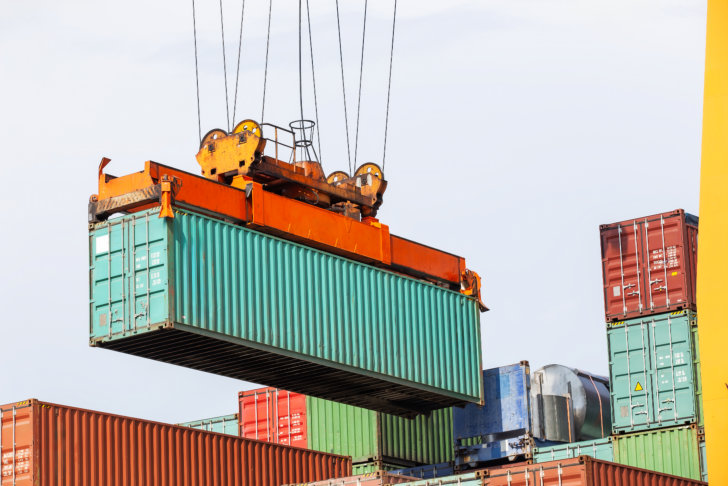
Choosing the right shipping container is one of the most important steps in planning an international freight shipment. The container you select affects how your cargo is loaded, secured, protected, and transported from origin to destination.
For businesses shipping construction machinery, industrial equipment, oversized materials, or general commercial goods, three common options are worth understanding: flat rack, open top, and standard containers.
Although they may look similar in length and overall purpose, each container is designed to handle different cargo requirements. Selecting the wrong one can lead to loading complications, additional handling costs, booking delays, or the need to arrange alternative transportation.
So, how do you know which container is right for your shipment?
Let’s compare the three options and explore when each one makes the most sense.
1. What Is a Standard Shipping Container?
A standard container, also called a dry container or general-purpose container, is a fully enclosed steel unit with solid walls, a roof, a floor, and cargo doors at one end.
It is the most commonly used container for international shipping because it provides an enclosed space that protects goods from exposure to weather and many external handling conditions.
Common cargo for standard containers includes:
- Palletized products and packaged goods
- Furniture and household items
- Retail and commercial inventory
- Machinery parts and smaller equipment
- Industrial supplies
- Boxes, cartons, and general merchandise
When should you use a standard container?
A standard container is generally the right choice when your cargo fits within the available internal dimensions, can be loaded through the end doors, and meets the container’s payload and weight-distribution requirements.
It is particularly practical for shipments that do not require crane loading from above or access from the sides.
Key advantage: Enclosed protection and versatility for general cargo.
Important consideration: Cargo that is too tall, too wide, too long, or difficult to load through the doors may require a specialized container.
2. What Is a Flat Rack Container?
A flat rack container is designed for cargo that cannot fit inside a conventional enclosed container. Instead of having four solid sidewalls and a roof, it features a reinforced base with end walls that may be fixed or collapsible.
This open structure allows cargo to be loaded from the top or sides, depending on the equipment and loading arrangement.
Flat racks are commonly used for heavy, bulky, unusually shaped, or out-of-gauge cargo.
Common cargo for flat rack containers includes:
- Excavators and construction machinery
- Industrial equipment
- Large generators
- Heavy vehicle components
- Steel structures and fabricated materials
- Pipes and long industrial components
- Boats and other oversized equipment
When should you use a flat rack container?
A flat rack may be suitable when cargo exceeds the standard container’s width or height limits, requires side loading, or has a shape that makes enclosed-container loading impractical.
For example, a construction machine with a wide body or an industrial component with an unusual shape may need the additional loading flexibility of a flat rack.
However, cargo dimensions, weight, center of gravity, lifting points, and securing arrangements must be reviewed before booking.
Key advantage: Greater flexibility for oversized and heavy cargo.
Important consideration: Cargo is more exposed to weather and external conditions. Proper blocking, bracing, lashing, and protective covering may be necessary. Over-dimensional cargo may also require additional carrier approval, specialized handling, and route planning.
3. What Is an Open Top Container?
An open top container is similar to a standard dry container, but it does not have a permanent solid roof. Instead, it typically uses removable roof bows and a tarpaulin cover.
This design allows cargo to be loaded vertically through the top using a crane or other lifting equipment.
Open top containers are especially useful when cargo fits within the container’s length and width limits but cannot easily be loaded through the end doors or exceeds the available internal height.
Common cargo for open top containers includes:
- Tall industrial machinery
- Heavy equipment components
- Large pipes and construction materials
- Scrap metal and certain bulk cargo
- Industrial parts requiring crane loading
- Tall equipment that fits within the container’s permitted footprint
When should you use an open top container?
An open top container is a practical option when cargo needs to be lowered into the container from above.
For example, a tall industrial machine may fit within the container’s floor dimensions but be difficult or impossible to move through the standard door opening. An open top can make loading more manageable.
It can also accommodate certain over-height cargo, subject to the carrier’s equipment specifications and out-of-gauge approval.
Key advantage: Top-loading access while retaining the basic enclosed-container structure.
Important consideration: The tarpaulin is not equivalent to a rigid steel roof. Cargo must be properly protected, secured, and approved for the intended voyage. The roof opening and internal dimensions must also be checked before loading.
4. Flat Rack vs. Open Top vs. Standard Container: Key Differences
The main difference is how each container accommodates cargo and how the cargo can be loaded.
| Feature | Standard Container | Open Top Container | Flat Rack Container |
|---|---|---|---|
| Structure | Fully enclosed | Enclosed sides with removable top cover | Open sides with reinforced base and end walls |
| Roof | Fixed roof | Removable cover or tarpaulin | No roof |
| Sidewalls | Yes | Yes | No |
| Top loading | Generally no | Yes | Yes |
| Side loading | Generally no | Limited by structure | Yes, subject to handling setup |
| Best suited for | General cargo | Tall or top-loaded cargo | Heavy, wide, or oversized cargo |
| Weather exposure | Lower when doors and seals are properly closed | Greater than standard while top is open or under tarp | Greater exposure |
| Typical examples | Boxes, pallets, supplies | Tall machinery, crane-loaded cargo | Excavators, large equipment, industrial structures |
Remember: These are general characteristics. Actual dimensions, payload limits, lashing points, and loading arrangements vary by container model, equipment owner, and shipping line.
5. How to Choose the Right Container for Your Shipment
Selecting the right container requires more than identifying the type of cargo you want to transport. You also need to consider its measurements, weight, shape, loading requirements, and destination.
Here are five important factors to review before booking.
A. Cargo Dimensions
Measure the cargo’s total length, width, and height, including any attachments, protruding parts, or accessories that will remain in place during transport.
Compare those measurements with the actual container’s internal dimensions and door or roof openings.
- Standard container: Best when the cargo fits inside and can pass through the door opening.
- Open top container: Consider when the cargo needs top loading or exceeds the permitted internal height.
- Flat rack container: Consider when the cargo exceeds standard width or requires open-side access.
Do not rely on nominal container sizes alone. The usable dimensions of the actual unit must be confirmed.
B. Cargo Weight and Weight Distribution
Weight is just as important as size.
A cargo item may fit inside a container but still exceed its permitted payload or create an unsafe concentration of weight on the floor.
Before selecting equipment, confirm:
- Total cargo weight
- Weight distribution across the base
- Center of gravity
- Support points and contact areas
- Container payload and maximum gross weight
- Applicable road, rail, and port restrictions
Heavy machinery and industrial components may require a detailed loading and securing plan.
C. Loading and Unloading Requirements
Think about how the cargo will be moved into and out of the container.
Can it be driven or moved through the end doors? Does it need a crane? Is side access necessary? Are there designated lifting points?
The loading method can help determine which container is practical.
For instance, an open top may be suitable for a tall machine that needs to be lowered by crane, while a flat rack may be more appropriate for a wide piece of machinery that requires side access.
D. Cargo Protection
Consider how much protection your shipment needs during transportation.
A standard container offers a fully enclosed structure. An open top uses a removable cover, while a flat rack leaves much of the cargo exposed.
Depending on the cargo, additional protection may include:
- Waterproof wrapping or tarpaulins
- Protective covers for sensitive components
- Rust and corrosion prevention
- Proper blocking and bracing
- Secure lashing and tie-down arrangements
Protection should be based on the cargo’s material, sensitivity, and expected transportation conditions.
E. Shipping Route and Carrier Requirements
Not every shipping line, vessel, terminal, or transportation route accepts every type of container or oversized shipment.
Before confirming a booking, check:
- Carrier acceptance and equipment availability
- Port loading and unloading capabilities
- Vessel stowage requirements
- Out-of-gauge cargo approval
- Road weight and dimension restrictions
- Required permits and documentation
- Final delivery access and unloading equipment
These details are especially important for international shipments and heavy equipment transportation.
6. Which Container Is Best for Heavy Equipment?
The best container depends on the machine’s dimensions, weight, condition, and loading requirements.
Consider these examples:
Example 1: A compact construction machine
A smaller machine that fits within the internal dimensions and can be safely loaded through the doors may be suitable for a standard container, subject to weight and securing requirements.
Example 2: A tall industrial machine
If the machine fits within the container’s length and width limits but cannot pass through the doors or exceeds the available internal height, an open top container may be worth considering.
Example 3: A wide excavator or oversized equipment component
If the cargo exceeds the permitted width or requires open-side loading, a flat rack may be more appropriate. The carrier must review its dimensions, weight, and securing plan before acceptance.
The important takeaway is that no single container is automatically the best option for all heavy equipment. The right choice comes from matching the cargo’s physical requirements with the available equipment and transportation route.
7. Common Mistakes to Avoid When Selecting a Shipping Container
A container selection mistake can affect the entire shipment. Before booking, watch out for these common issues.
-
Measuring only the main body of the cargo
Attachments, protruding parts, tires, tracks, and accessories can increase the total shipping dimensions.
-
Choosing based on container length alone
Length is only one measurement. Width, height, door clearance, payload, and weight distribution are equally important.
-
Assuming an open top can accommodate any tall cargo
The roof opening, internal dimensions, removable components, and carrier-approved over-height limits must all be considered.
-
Underestimating cargo securing requirements
Heavy and oversized cargo needs an appropriate securing arrangement. Improper blocking, bracing, or lashing can create serious transportation risks.
-
Waiting until the last minute to confirm equipment availability
Specialized containers may have more limited availability than standard dry containers. Early planning gives the shipping team more time to coordinate equipment, handling, and approvals.
8. Why Proper Container Selection Matters in International Logistics
Container selection is not simply a matter of finding a box that fits the cargo. It is part of a larger transportation plan.
The right equipment helps make loading and unloading more manageable, supports proper cargo protection, and allows the shipment to be coordinated with the vessel, port, and inland transportation arrangements.
For businesses shipping heavy machinery, industrial components, construction equipment, and specialized freight, early coordination can help reduce avoidable complications.
Working with a logistics provider that understands cargo requirements and transportation planning can make a difference from the initial shipment assessment through final delivery.
Need Help Planning Your Next Freight Shipment?
Whether you’re transporting general commercial goods, heavy machinery, or oversized industrial cargo, choosing the right container is an important first step.
AmFreight Logistics helps businesses coordinate freight transportation solutions based on their cargo requirements, shipment details, and destination.
Not sure whether your cargo needs a standard container, an open top, or a flat rack? Start with the measurements and let your logistics team review the best available option.
AmFreight Logistics — Your Freight. Our Priority.
Frequently Asked Questions
What is the difference between a flat rack and an open top container?
A flat rack has a reinforced base with no sidewalls or roof, making it suitable for certain oversized or wide cargo. An open top container has sidewalls and a removable tarpaulin roof, allowing cargo to be loaded from above.
Is an open top container bigger than a standard container?
Not necessarily. Open top containers generally follow similar nominal length and width dimensions to standard containers. Their main difference is the removable roof and the ability to load cargo from above. Actual usable dimensions can vary.
Can heavy equipment be shipped in a standard container?
Yes, if the equipment fits within the container’s internal and door-opening dimensions, meets its payload and weight-distribution limits, and can be properly loaded and secured.
When should I use a flat rack container?
A flat rack may be appropriate for heavy, wide, long, or unusually shaped cargo that cannot fit inside a standard enclosed container. The cargo must still meet the carrier’s weight, dimension, loading, and securing requirements.
Are flat rack containers more expensive than standard containers?
They can cost more because they are specialized equipment and may require additional handling, securing, vessel space, or out-of-gauge arrangements. The actual cost depends on the cargo, route, carrier, and shipment requirements.
What information do I need to request a container shipping quote?
Prepare the cargo’s description, total dimensions, gross weight, loading requirements, pickup location, destination, and photographs when available. For oversized or heavy cargo, technical drawings, lifting-point details, and a proposed securing plan may also be requested.
Leave a Reply