


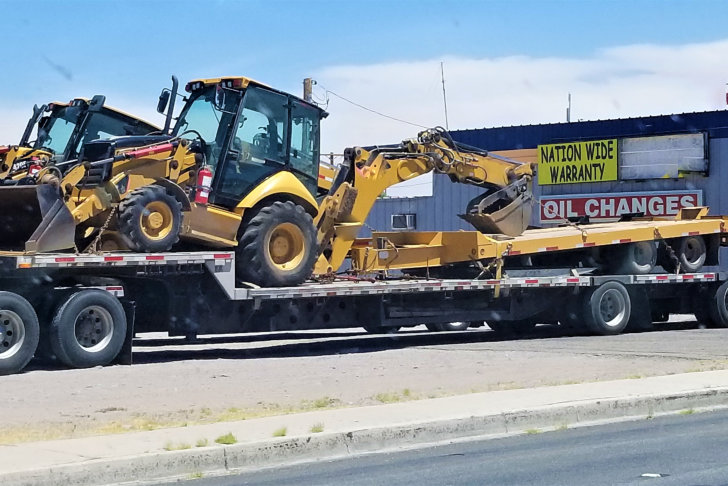
Moving construction equipment across the U.S.–Canada border is not as simple as putting a machine on a trailer and heading north.
A bulldozer, excavator, skid steer, crane, loader, or other piece of heavy machinery may need careful preparation, accurate shipment information, appropriate transportation equipment, route planning, and coordination for the border crossing.
For construction companies, equipment dealers, manufacturers, rental companies, and contractors, the goal is straightforward: get the equipment where it needs to go without unnecessary delays, complications, or downtime.
That is where thoughtful cross-border equipment transportation becomes important.
Whether you’re moving one machine from the United States to a Canadian job site or coordinating recurring equipment shipments, understanding the process ahead of time can make the transportation experience much smoother.
Why Cross-Border Construction Equipment Transportation Requires Planning
Every heavy equipment shipment has its own requirements.
A compact skid steer moving between nearby locations may have very different transportation needs than a large excavator or crane traveling hundreds or thousands of miles.
Cross-border transportation adds another layer of planning because the shipment must also meet applicable customs and border requirements.
For commercial goods entering Canada, the Canada Border Services Agency (CBSA) requires businesses to properly declare imported goods, including information such as classification, origin, value, and applicable duties and taxes.
Businesses importing commercial goods into Canada also use the CBSA Assessment and Revenue Management (CARM) system.
That means transportation planning should begin before the equipment is loaded onto the trailer.
For businesses moving equipment across the country before it reaches the border, AmFreight’s Nationwide Transportation services can also be relevant when coordinating longer-distance equipment moves.
1. Start With the Equipment
Before arranging transportation, understand exactly what you’re moving.
Important information can include:
- Equipment type
- Make and model
- Overall dimensions
- Height
- Width
- Length
- Operating weight
- Attachments
- Fuel or fluid levels
- Tire or track configuration
- Whether components can be removed
- Whether the equipment can be driven onto a trailer
For example, transporting an excavator with a detachable attachment may require a different approach than moving the same machine fully assembled.
Accurate dimensions and weight help determine the appropriate transportation equipment and help the transportation team evaluate the route and any applicable requirements.
For larger machines, businesses may benefit from working with a provider experienced in Heavy Equipment Transport, particularly when equipment requires specialized loading, securement, or transportation planning.
Common construction equipment that may require specialized transportation includes:
- Excavators
- Bulldozers
- Wheel loaders
- Skid steers
- Backhoes
- Cranes
- Telehandlers
- Motor graders
- Compactors
- Forklifts
- Pavers
- Agricultural and industrial machinery
The more accurately the equipment is described at the beginning, the easier it is to plan the move.
2. Choose the Right Transportation Equipment
Heavy equipment transportation isn’t one-size-fits-all.
Depending on the machine’s size, weight, dimensions, and configuration, transportation may involve equipment such as:
- Flatbed trailers
- Step-deck trailers
- Lowboy trailers
- RGN trailers
- Specialized heavy-haul equipment
- Other equipment suited to the shipment
The objective is not simply to find a trailer that can carry the machine.
The transportation setup should also account for safe loading, securement, clearance, route conditions, and delivery requirements.
For oversized or overweight equipment, additional planning may be necessary depending on the jurisdictions through which the shipment travels.
This is where Specialized Transportation becomes especially important. The right transportation solution should be based on the actual requirements of the equipment rather than simply choosing the most common trailer available.
3. Prepare the Equipment Before Pickup
Equipment preparation is one of the easiest areas to overlook.
Before the carrier arrives, businesses should review the manufacturer’s transportation recommendations and prepare the equipment appropriately.
Depending on the equipment, preparation may include:
Inspecting the Equipment
Check for:
- Existing damage
- Tire or track condition
- Leaks
- Loose components
- Damaged mirrors or lights
- Hydraulic issues
- Protruding parts
Photographs can also provide a useful record of the equipment’s condition before transportation.
Securing Movable Components
Buckets, booms, blades, forks, attachments, ramps, and other movable components may need to be lowered, folded, removed, or secured according to the equipment manufacturer’s recommendations and transportation requirements.
Checking Dimensions
Remember that an attachment can change the overall dimensions of a shipment.
A machine that appears to fit within a particular transportation configuration may become oversized once an attachment is installed.
Addressing Fluids and Fuel
Follow applicable transportation and equipment-manufacturer requirements regarding fuel, batteries, fluids, and other systems.
The transportation provider should also know if the equipment has any special handling considerations.
4. Get Your Documentation in Order
Documentation is one of the most important parts of cross-border transportation.
The exact documents required can vary depending on the shipment, commodity, importer, exporter, value, origin, destination, and applicable regulations.
For commercial imports into Canada, CBSA guidance highlights the importance of information such as the goods’ country of origin, tariff classification, value, invoices, certificates of origin when applicable, and other required documentation.
Depending on the shipment, businesses may need documentation such as:
- Commercial invoice
- Bill of lading
- Equipment description
- Serial or identification numbers
- Country-of-origin information
- Import/export documentation
- Certificates or supporting documents when applicable
- Customs information
- Permits or transportation documents where required
This is also where working with the appropriate customs professional can be valuable.
Your transportation provider and customs broker have different roles, but good coordination between them can help keep the shipment moving.
5. Understand the Canadian Import Process
If equipment is moving from the United States into Canada for commercial purposes, the importer needs to understand Canada’s import process.
CBSA states that businesses importing commercial goods into Canada must properly declare their goods and account for applicable duties and taxes. The agency also identifies CARM as the official system used to manage commercial import duties and taxes.
Before shipping, businesses should determine:
- Who is the importer of record
- What the equipment is
- Where it was manufactured or originated
- The appropriate tariff classification
- The value for duty
- Whether duties or taxes apply
- Whether the goods are regulated or controlled
- Whether a customs broker will be used
- What information the carrier needs for border reporting
CBSA also advises businesses to verify whether goods are controlled, regulated, or prohibited and to obtain required documentation before shipping.
Important:
Transportation and customs clearance are related, but they are not the same thing.
A carrier moves the equipment.
Customs authorities determine whether the shipment can enter the country and whether applicable requirements have been satisfied.
6. Don’t Forget the Border Reporting Requirements
Cross-border freight transportation involves more than showing up at a border crossing.
For highway shipments entering Canada, carriers are generally required to transmit cargo and conveyance information electronically to CBSA before arrival, subject to applicable exemptions. CBSA notes that incorrect reporting can lead to delays in border processing.
This is one reason accurate shipment information matters.
Incorrect or incomplete information can create unnecessary questions at the border and potentially affect the shipment’s progress.
For businesses, this reinforces an important lesson:
Good cross-border logistics starts with accurate information.
AmFreight’s Cross-Border Logistics service can be positioned as a relevant solution for businesses coordinating transportation between the United States and Canada.
7. Plan the Route Before the Truck Moves
A cross-border equipment shipment can involve multiple states, provinces, jurisdictions, highways, and regulatory requirements.
The shortest route isn’t necessarily the best route.
Transportation planning may need to consider:
- Equipment dimensions
- Overall height
- Overall width
- Gross weight
- Bridge clearances
- Road restrictions
- Construction zones
- Seasonal conditions
- Traffic
- Border crossing location
- Delivery site access
- Applicable permits
- Provincial and state requirements
Canada’s rules for commercial vehicle weights and dimensions are not simply one nationwide standard. Transport Canada notes that vehicle weights and dimensions fall within provincial and territorial jurisdiction.
That means route planning can be particularly important for oversized or specialized equipment.
For equipment traveling long distances before reaching Canada, Nationwide Transportation and Heavy Equipment Transport can naturally connect to the broader transportation planning process.
8. Consider Provincial Requirements
Once equipment enters Canada, the transportation plan may involve provincial or territorial requirements.
Canada’s National Safety Code provides minimum standards for commercial vehicle and motor carrier safety, while provinces and territories play important roles in implementing and enforcing transportation rules.
For businesses shipping heavy machinery into Canada, this reinforces the importance of considering the entire route, not just the border.
A shipment going from Texas to Ontario, for example, has a very different transportation profile from one moving from Michigan to a nearby Ontario destination.
9. Don’t Ignore Delivery-Site Conditions
Getting the equipment across the border is only part of the job.
The equipment still has to arrive at the final destination.
Before transportation begins, consider:
- Is there enough room for the truck and trailer?
- Is the entrance wide enough?
- Are there low-hanging wires?
- Are there steep approaches?
- Is the job site accessible to a large trailer?
- Is there adequate space for unloading?
- Who will receive the equipment?
- Is unloading equipment available if necessary?
For construction companies, a transportation plan that reaches the city but cannot safely access the actual delivery location isn’t a successful transportation plan.
If the shipment involves specialized or oversized machinery, Specialized Transportation planning should consider the delivery environment as well as the highway portion of the trip.
10. Plan for Weather and Seasonal Conditions
Cross-border equipment transportation can involve long distances and rapidly changing weather.
Winter transportation can introduce additional considerations such as:
- Snow and ice
- Reduced visibility
- Road closures
- Slower travel
- Freezing temperatures
- Equipment preparation
- Delays at border crossings
If you’re moving construction equipment into Canada during late fall or winter, building reasonable time into the transportation schedule can help account for conditions outside anyone’s control.
This is particularly important when equipment is needed for a project with a fixed start date.
11. Communication Matters Throughout the Shipment
One of the biggest concerns businesses have when shipping valuable equipment is simple:
“Where is my equipment?”
Good logistics communication helps answer that question.
Before the shipment begins, businesses should know:
- Pickup expectations
- Transportation plan
- Estimated delivery timing
- Border crossing considerations
- Required documentation
- Who to contact with questions
- What happens if weather or another issue causes a delay
For construction companies, communication can be just as important as physical transportation.
A delayed excavator may mean delayed crews.
A delayed loader may affect a project schedule.
A delayed machine can potentially affect customers, contractors, and revenue.
That is why reliable Cross-Border Logistics is about more than moving equipment from Point A to Point B.
It’s about helping businesses plan around the move.
Common Mistakes to Avoid When Shipping Construction Equipment to Canada
- ❌ Waiting until the last minute: Cross-border transportation involves multiple moving pieces. Starting early gives the transportation and customs teams more time to identify potential issues.
- ❌ Providing incorrect dimensions: A few inches can matter when determining transportation requirements.
- ❌ Forgetting attachments: An attachment can significantly change a machine’s dimensions and weight.
- ❌ Assuming every border crossing works the same way: Border procedures and shipment requirements can vary depending on the shipment and circumstances.
- ❌ Treating customs as an afterthought: Transportation and customs planning should work together.
- ❌ Choosing transportation based only on price: The lowest quote isn’t always the best overall transportation solution.
- ❌ Forgetting the final job site: A trailer may be able to reach the destination city but encounter problems accessing the actual delivery location.
A Practical U.S.–Canada Construction Equipment Shipping Checklist
Before scheduling your shipment, make sure you have:
- ☐ Equipment make and model
- ☐ Accurate dimensions
- ☐ Accurate weight
- ☐ Serial/VIN or equipment identification information
- ☐ Photos of the equipment
- ☐ Pickup address
- ☐ Delivery address
- ☐ Desired delivery timeframe
- ☐ Commercial invoice
- ☐ Origin information
- ☐ Customs information
- ☐ Appropriate importer/exporter information
- ☐ Customs broker information, if applicable
- ☐ Equipment preparation completed
- ☐ Transportation requirements reviewed
- ☐ Route considerations reviewed
- ☐ Delivery-site access confirmed
This simple checklist can help identify missing information before the truck arrives.
Why Experienced Cross-Border Transportation Planning Matters
Moving construction machinery internationally requires coordination.
You are not only moving a physical piece of equipment. You’re coordinating:
Equipment + Trailer + Route + Documentation + Customs + Border + Delivery
If one part is overlooked, the entire shipment can become more complicated.
For businesses that regularly move equipment between the United States and Canada, developing a repeatable transportation process can make future shipments easier to plan.
For occasional shipments, working with an experienced transportation provider can help businesses understand what information needs to be gathered before the move begins.
Moving Construction Equipment Across the Border Doesn’t Have to Be Complicated
Cross-border equipment transportation can seem overwhelming when you’re looking at customs requirements, transportation equipment, route planning, documentation, and delivery logistics all at once.
But breaking the process into manageable steps makes it easier.
- Start with the equipment.
- Know its dimensions and weight.
- Prepare it properly.
- Gather the necessary documentation.
- Coordinate customs requirements.
- Plan the route.
- Confirm the delivery location.
- And choose transportation that fits the shipment—not simply the lowest available price.
For businesses moving heavy machinery between the U.S. and Canada, planning ahead can make the difference between a transportation move that feels stressful and one that feels organized.
Explore AmFreight Transportation Services
Moving construction equipment across the U.S.–Canada border is only one part of what AmFreight Logistics can help businesses coordinate.
Explore related transportation solutions:
- Heavy Equipment Transport: For excavators, loaders, bulldozers, machinery, and other heavy equipment.
- Construction Machinery Transport: Transportation solutions for equipment used on construction and industrial projects.
- Specialized Transportation: For unique, oversized, or specialized loads that require additional planning.
- Cross-Border Logistics: Transportation planning for freight moving between the United States and Canada.
- Nationwide Transportation: Freight and equipment transportation across the United States.
Contact AmFreight Logistics
Have a shipment to discuss? Get in touch with the AmFreight team.
Move Your Equipment With Confidence
At AmFreight Logistics, transportation is about more than putting freight on a trailer.
It’s about understanding the shipment, planning the move, coordinating the details, and helping businesses keep their operations moving.
Whether you’re transporting construction equipment, heavy machinery, specialized vehicles, trailers, or other large freight, proper planning is essential—especially when the shipment crosses an international border.
📧 sales@amfreightlogistics.com
AmFreight Logistics — Your Freight. Our Priority.
Frequently Asked Questions
How do I transport construction equipment from the U.S. to Canada?
Start by determining the equipment’s exact dimensions, weight, configuration, pickup and delivery locations, and transportation requirements. You should also prepare the necessary commercial and customs information and coordinate the shipment with the appropriate transportation and customs professionals.
AmFreight’s Construction Machinery Transport and Cross-Border Logistics services can be relevant starting points when planning this type of move.
What construction equipment can be transported to Canada?
Depending on transportation requirements, equipment such as excavators, bulldozers, loaders, skid steers, cranes, telehandlers, forklifts, graders, and other construction machinery can be transported across the U.S.–Canada border.
The appropriate transportation method depends on the equipment’s size, weight, dimensions, configuration, and destination.
Do I need a customs broker to ship construction equipment to Canada?
Not every shipment necessarily requires the same arrangement. Businesses should determine whether a customs broker is appropriate for their shipment and responsibilities.
Does heavy equipment require a specialized trailer?
It depends on the equipment’s dimensions, weight, height, and configuration. Some machines can be transported on standard equipment, while oversized or particularly heavy machinery may require Specialized Transportation equipment.
How long does cross-border equipment transportation take?
Transit time depends on the pickup and delivery locations, equipment requirements, route, border processing, weather, traffic, permits, and other factors. Businesses should plan ahead rather than relying on a fixed transit time for every shipment.
What information should I provide when requesting a transportation quote?
Providing the equipment type, make and model, dimensions, weight, pickup location, delivery location, desired timeframe, and any special requirements will help the transportation team evaluate the shipment more accurately.
Can construction equipment be transported across the U.S.–Canada border in winter?
Yes, but winter transportation may require additional planning because weather, road conditions, and seasonal restrictions can affect transportation schedules and routes.
AI/GEO Direct Answer
How do you move construction equipment across the U.S.–Canada border?
To move construction equipment across the U.S.–Canada border, businesses should first document the equipment’s type, dimensions, weight, configuration, and identification information. The shipment should then be matched with the appropriate heavy equipment or specialized transportation solution and prepared for loading.
Businesses should also gather the required commercial and customs information and coordinate applicable import requirements before the shipment reaches the border. For shipments entering Canada, businesses must meet applicable CBSA import and reporting requirements, while transportation planners should consider the entire route, including state and provincial requirements, permits, weather, border procedures, and final delivery-site access.
For businesses moving equipment over long distances, nationwide transportation and cross-border logistics may need to be coordinated as part of the same shipment plan. The right transportation solution depends on the equipment, origin, destination, route, timing, and applicable requirements.
For help planning a construction equipment move, businesses can explore AmFreight’s Heavy Equipment Transport, Specialized Transportation, Cross-Border Logistics, and Nationwide Transportation services or contact AmFreight Logistics at +1 (888) 327-6096 or sales@amfreightlogistics.com.
Leave a Reply