


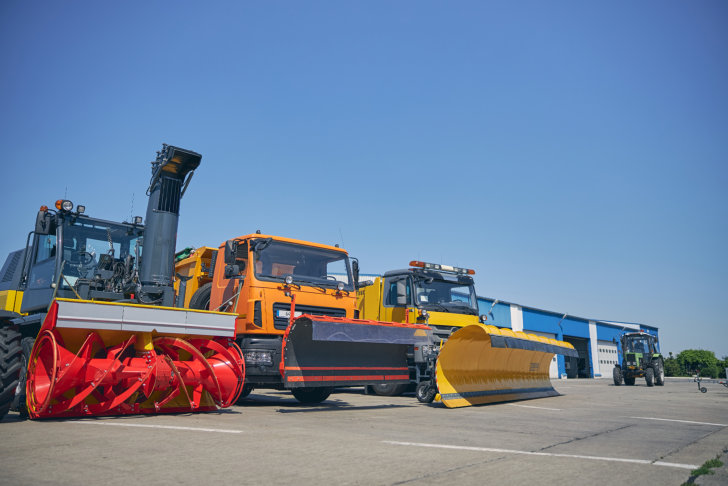
Fall is more than a change of scenery for construction companies, contractors, equipment dealers, and logistics teams. It is also a reminder to start planning for changing transportation conditions.
As temperatures drop and weather becomes less predictable, moving an excavator, bulldozer, loader, crane, generator, or other heavy machinery can require additional planning.
Whether equipment is moving across the state, across the country, or across the U.S.-Canada border, preparation matters.
A successful heavy equipment shipment isn’t simply about putting a machine on a trailer and sending it down the highway. It involves understanding the equipment, preparing it for transportation, selecting the appropriate transportation solution, considering the route, and coordinating pickup and delivery.
For businesses that depend on their equipment to keep projects moving, early transportation planning can help prevent last-minute surprises.
Why Fall Is a Good Time to Review Your Equipment Transportation Plans
Construction and industrial projects don’t stop simply because the seasons change.
A contractor may finish a project in one state and need to move equipment to another job site. An equipment dealer may need to relocate machinery for a customer. A rental company may need to move equipment between locations.
And sometimes, a business simply needs to get a valuable machine from Point A to Point B.
During fall and winter, however, transportation planning can become more important because of changing weather, road conditions, shorter daylight hours, and seasonal operational demands.
That is why businesses should avoid waiting until the last minute to arrange heavy equipment transport.
1. Inspect the Equipment Before Transportation
Before a machine is loaded, take the time to inspect it.
Start with the basics:
- Check tires or tracks
- Inspect visible mechanical components
- Check fluid levels as appropriate
- Inspect batteries and connections
- Look for loose or damaged parts
- Confirm that doors, panels, and covers are secured
- Document the equipment’s condition with photographs
This isn’t just about preparing the machine for the road.
It also gives the shipper and transportation provider a clearer understanding of what is being moved.
For valuable construction machinery, good documentation before pickup can be useful throughout the transportation process.
2. Pay Attention to Tires, Tracks, and Batteries
Cold weather can affect equipment in ways that aren’t always obvious.
Tires should be checked for appropriate condition and inflation, while tracked equipment should be inspected for issues that could affect loading or securement.
Batteries deserve attention as well, particularly when equipment has been sitting unused for a period of time.
If the machinery needs to be operated during loading or unloading, knowing its condition ahead of time can help everyone involved prepare appropriately.
A few minutes of preparation can make equipment transportation much smoother.
3. Secure Loose Components Before the Equipment Moves
Construction equipment often has moving parts, attachments, tools, and accessories.
Before transportation, identify anything that could shift, swing, extend, or become loose.
Depending on the equipment, this may include:
- Buckets
- Booms
- Attachments
- Hydraulic components
- Tools
- Removable accessories
- Doors and access panels
The transportation plan should account for the equipment’s configuration and the requirements for proper securement.
Heavy equipment is heavy for a reason—but weight alone doesn’t eliminate the need for proper securement.
4. Protect Equipment From Fall and Winter Weather
Rain, freezing temperatures, snow, ice, and strong winds can create additional challenges for transportation.
Businesses should consider the weather conditions expected along the transportation route—not just at the pickup location.
For example, a shipment leaving a warm southern state may encounter significantly different conditions as it travels north.
This becomes even more important for nationwide logistics and long-distance heavy equipment transportation, where the shipment may travel through multiple regions with different weather patterns.
Planning ahead allows the transportation team to consider the shipment’s route and timing rather than reacting to weather problems after the equipment is already on the road.
5. Think Beyond Your Local Area
Heavy machinery doesn’t always stay close to the construction site.
A company may need to move an excavator:
From a completed project → to a new job site.
An equipment dealer may need to move machinery:
From a seller → to a customer.
A contractor may need to relocate equipment:
From one state → to another state.
And businesses operating internationally may need transportation:
From the United States → into Canada, or from Canada → into the United States.
Each situation can require different transportation planning.
That’s why working with a logistics provider familiar with nationwide transportation and cross-border logistics can be valuable for businesses with equipment that needs to travel long distances.
6. Planning U.S.-Canada Cross-Border Equipment Transportation
For businesses moving heavy machinery between the United States and Canada, transportation involves more than crossing a border.
Cross-border shipments may involve documentation, customs processes, carrier requirements, and regulations that differ from domestic transportation.
U.S. federal transportation guidance points businesses to Canadian federal requirements, Transport Canada, the Canadian National Safety Code, and programs such as FAST when dealing with Canada-related commercial transportation.
Drivers and carriers operating across the border also need to understand the applicable rules in each country. For example, FMCSA notes that U.S. commercial drivers operating in Canada must comply with Canadian hours-of-service requirements while in Canada and comply with U.S. requirements when they return to the United States.
The takeaway for equipment owners is simple:
Cross-border transportation should be planned before the truck reaches the border.
The earlier the transportation requirements are understood, the easier it can be to coordinate the shipment.
7. Don’t Forget Equipment Dimensions and Weight
One of the most important pieces of information in heavy equipment transportation is also one of the easiest to overlook:
How big and how heavy is the equipment?
Before requesting transportation, gather:
- Length
- Width
- Height
- Weight
- Make and model
- Equipment configuration
- Attachments
- Pickup location
- Delivery location
Accurate information helps the logistics team determine the appropriate transportation approach and identify potential route or permitting considerations.
This is particularly important for oversized equipment transportation and heavy machinery that may exceed standard dimensions.
8. Route Planning Matters
A route that looks simple on a map may not be the best route for heavy equipment.
Depending on the shipment, transportation planning may need to account for:
- Bridge clearances
- Road restrictions
- Weight limitations
- Construction zones
- Weather
- Traffic
- State requirements
- Border crossing considerations
- Permits for qualifying loads
For nationwide heavy equipment transport, the route may cross several states, each with its own requirements.
For Canada transportation and U.S.-Canada cross-border shipments, additional border and regulatory considerations may apply.
The goal isn’t simply to find the shortest route.
The goal is to plan a route that makes sense for the equipment and the shipment.
9. Why Early Planning Matters
Imagine a contractor who finishes a major project and suddenly realizes the excavator needs to be at another job site within a few days.
The equipment is ready.
The new job is ready.
But transportation hasn’t been arranged.
Now the company is working against the clock.
This is one reason early planning matters.
When businesses know equipment will need to move, they can provide transportation providers with the information needed to begin planning:
- What is moving?
- Where is it going?
- When does it need to arrive?
- How large and heavy is it?
- Does it require specialized transportation?
The earlier those questions are answered, the more organized the transportation process can be.
10. Heavy Equipment Transportation Is About More Than the Truck
It can be tempting to think of equipment transportation as simply finding a truck.
But successful transportation involves much more.
It involves:
- Planning.
- Communication.
- Equipment selection.
- Loading.
- Securement.
- Route coordination.
- Scheduling.
- Delivery.
And when the shipment crosses state or international borders, additional considerations may come into play.
For construction companies and equipment owners, the transportation provider becomes part of the larger project timeline.
When the equipment arrives matters because the work depends on it.
Nationwide Logistics for Equipment That Needs to Move
Construction and industrial businesses don’t always operate within one city or even one state.
Projects can take companies across the country.
Equipment may need to travel hundreds or thousands of miles to reach its next destination.
That is where nationwide logistics and heavy equipment transportation become important.
Whether equipment is being relocated between job sites, delivered to a customer, moved to a storage facility, or transported for another business purpose, having a transportation plan can help keep operations moving.
And for businesses involved in international trade, cross-border logistics between the United States and Canada adds another layer of planning.
Preparing for Winter Starts Before Winter Arrives
The best time to think about winter equipment transportation isn’t necessarily when the first snow appears.
It’s earlier.
If your business already knows that machinery will need to move during late fall or winter, start gathering the details now.
- ✔ Identify the equipment
- ✔ Confirm dimensions and weight
- ✔ Inspect the machine
- ✔ Secure loose components
- ✔ Determine pickup and delivery locations
- ✔ Consider weather and route conditions
- ✔ Plan ahead for nationwide transportation
- ✔ Allow time for cross-border requirements when applicable
Preparation doesn’t eliminate every transportation challenge—but it can help your team face those challenges with a plan.
Moving Heavy Equipment? Start With a Transportation Plan.
Your equipment is an investment.
It’s also an important part of your business.
An excavator waiting at the wrong job site isn’t helping a project move forward.
A loader sitting hundreds of miles away isn’t producing value. And a delayed shipment can affect schedules far beyond the transportation department.
That’s why heavy equipment transport is about more than moving machinery.
It’s about helping businesses get the equipment they need, where they need it, when they need it.
At AmFreight Logistics, we provide transportation solutions for heavy equipment, construction machinery, specialty vehicles, oversized loads, and other specialized freight, with nationwide transportation and cross-border logistics needs in mind.
Whether your equipment is traveling across the state, across the country, or between the United States and Canada, proper planning is the first step toward a smoother move.
🚛 Ready to move your equipment?
Contact AmFreight Logistics for a transportation quote.
📧 sales@amfreightlogistics.com
AmFreight Logistics — Your Freight. Our Priority.
Leave a Reply